
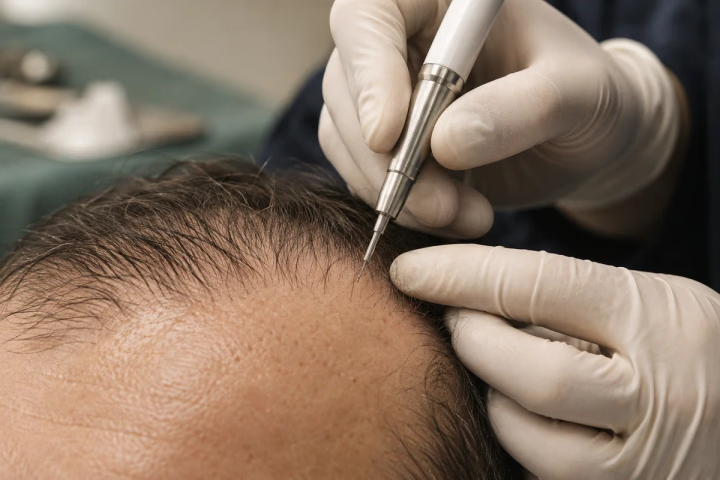
A DHI hair transplant uses an implanter instrument to place individual grafts into the recipient area. Grafts may first be collected by FUE. Your suitability and the team’s execution matter more than the name of a method.
What happens during DHI?
- Assessment and planning. The team assesses your scalp and donor supply, discusses realistic coverage and agrees the proposed hairline.
- Graft collection. Individual follicular units are harvested from a suitable donor area, typically with FUE.
- Implantation. Grafts are placed with an implanter according to the planned distribution, direction and angles.
- Care and review. You receive individual care instructions and a follow-up plan.
Is DHI right for your hair loss?
It may be considered for hairline work or other suitable areas, but a method cannot create unlimited donor hair. Hair loss pattern, donor quality, scalp health and likely future thinning all influence the proposal. A photo assessment is an initial step; the final decision requires clinical assessment.
Does DHI guarantee a better result?
No technique guarantees a particular density, growth rate or scar-free result. A transplant carries risks, including infection, scarring and graft failure. Ask how the proposed approach fits your case and who performs the procedure.
What about shaving?
İbrahim also offers Long DHI for selected patients. Whether the donor area or the recipient area needs shaving should be explained separately in your assessment.
What “direct implantation” means.
Koç Hair Center describes its DHI approach as placement with a Choi implanter. Each collected graft is loaded into the instrument, which creates a small recipient opening and places the graft in the same action. This avoids a separate step of opening recipient channels in advance. It does not mean the treatment involves no incisions.
Discuss the area you want to restore.
The centre describes DHI for selected areas of thinning and for some patients seeking additional coverage after an earlier transplant. Bring your previous treatment history and explain your priorities: a receding hairline, a thinning crown or a particular area that concerns you. Ask what can realistically be achieved with the donor hair available.
Make the recommendation personal.
Your free consultation is a chance to understand the proposed approach. Ask why it suits your situation, who carries out each stage and what support is available if you have concerns afterwards.
Your questions, answered.
What does DHI hair transplantation mean?
DHI means Direct Hair Implantation. Koç Hair Center describes using a Choi implanter to place collected grafts: the instrument creates the recipient opening and inserts the graft in one action. It describes implantation, so donor graft collection still takes place before that stage.
Is DHI better than FUE?
The labels describe different stages. FUE collects individual donor grafts, while DHI describes placing grafts with an implanter. They can be used in the same procedure. Ask how both collection and implantation are planned for your hair loss, rather than assuming the names identify two competing operations.
Is DHI hair transplantation painful?
Hair transplantation usually uses local anaesthetic to numb the scalp. You remain awake, and sensation returns as it wears off. This does not promise a completely pain-free experience. Ask how discomfort will be managed during and after your procedure, and which symptoms should prompt a call.
Is DHI hair transplantation safe?
DHI is a surgical procedure and carries risks. These include infection, bleeding, reactions to anaesthetic, scarring and grafts that do not grow. Your medical history and the treatment plan need review before proceeding. Ask the treating team how your risks and any postoperative concerns would be managed.
Does DHI mean I will not need to shave my hair?
Not automatically. Koç Hair Center describes a separate Long DHI approach that preserves existing recipient-area hair while donor hair is cut. Confirm exactly which zones would be prepared in your case. The unshaven transplant guide explains why the two areas need separate answers.
Can DHI add coverage after an earlier transplant?
Koç Hair Center lists selected patients seeking more coverage after a previous transplant among the potential uses of DHI. That is not automatic approval for another procedure. Share your earlier treatment details and ask what further assessment is needed before additional graft placement is recommended.
Will my hair look thicker immediately after DHI?
The appearance straight after surgery is not the final result. Transplanted hairs need months to grow, and their quality can continue improving afterwards. Ask when progress should be reviewed and how photographs will be compared. The results guide explains why timing matters when assessing a change.
Will I need hair loss medication after DHI?
Medical treatment may be combined with transplantation to help maintain the overall result. Whether medication is appropriate should be discussed with a prescribing clinician, including its expected benefits, limitations and possible side effects. Do not assume that choosing DHI settles the question of ongoing hair loss treatment.