
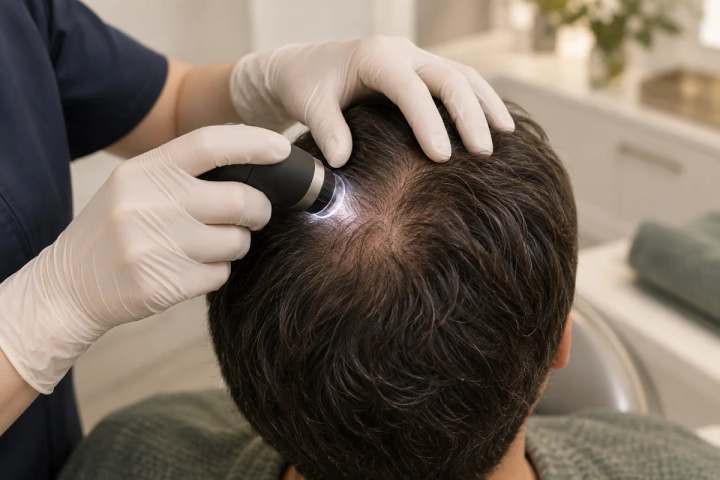
Understand the options before choosing
Koç Hair Center lists PRP, mesotherapy, autologous treatments and exosome therapy alongside hair transplantation. These labels describe different approaches, with different levels of evidence. Current availability and your suitability should be confirmed during a consultation.
PRP for hair loss
Platelet-rich plasma is prepared from a sample of your own blood and injected into the scalp. Some controlled studies report improvements in pattern hair loss, while other trials have not found a clear advantage over placebo. Protocols vary. PRP should be discussed in terms of your diagnosis, likely benefit, repeat sessions and follow-up, without a promise of regrowth.
Scalp mesotherapy
Mesotherapy describes injections into the skin, rather than one standard medicine. Koç’s page describes mixtures that may include vitamins, minerals and amino acids. Evidence for one injected ingredient cannot establish the effectiveness of a different mixture. Ask exactly what would be used, why it fits your diagnosis and what adverse effects are possible.
What does “autologous” mean?
Autologous means material comes from your own body. PRP is also autologous. The term alone does not identify a specific treatment or establish effectiveness. Koç’s page discusses preparations from blood or other tissues without identifying one standardized product. Ask about the material, processing, evidence and regulatory status. Using your own tissue does not eliminate procedural or infection risks.
Exosome-based approaches
Exosome treatments for hair loss require a careful discussion of the specific product and evidence. They should not be presented as a proven cure or a guaranteed way to restore follicles. The US FDA states that no exosome products are FDA-approved. That is a US regulatory statement, not a determination of a product’s status in Turkey. Ask the treating clinician to explain local authorization, risks and alternatives before considering treatment.
A consultation that helps you decide
Discuss when the shedding began, your scalp symptoms, family history, medicines and previous treatment. Ask whether assessment by a dermatologist or additional tests would help. Established medical options, monitoring or transplantation may enter the discussion depending on the diagnosis.
Request a free consultation with İbrahim Koç’s team to understand the next step. You do not need to choose an injection treatment before contacting us.
Your questions, answered.
How do I know which hair-loss treatment is right for me?
Start with a diagnosis. Gradual pattern thinning, sudden shedding and inflammatory scalp conditions can need different approaches. A clinician reviews the history and examines your scalp, sometimes arranging tests. Choose treatment after understanding the likely cause and the expected benefit.
Does PRP actually help hair growth?
Some controlled studies report improvement in pattern hair loss, while others have not shown a clear advantage over placebo. Preparation and treatment schedules differ. Ask what evidence supports the proposed protocol, what benefit is realistic and how your response will be measured.
Does PRP need repeat or maintenance sessions?
PRP is usually discussed as a course with follow-up rather than a single permanent fix. Repeat sessions may be recommended, but the schedule and benefit vary. Establish how the team will review progress and decide whether continuing treatment is worthwhile.
What happens if I stop using minoxidil?
For pattern hair loss, minoxidil’s benefit generally depends on continued use. Stopping can lead to loss of the improvement it helped maintain. Discuss the reason for stopping, any side effects and alternatives with your clinician instead of changing treatment around an online promise.
What should I ask about before starting finasteride?
Ask whether it fits your diagnosis and health history, which benefits are realistic and what side effects to watch for. Sexual and mood-related adverse effects are among the issues to discuss. A prescribing clinician should review current medicines and relevant reproductive considerations.
Is hair mesotherapy one standard treatment?
No. Mesotherapy describes an injection approach, and the contents can differ. Koç’s page lists mixtures including vitamins, minerals and amino acids. Ask for the exact formulation, the evidence for that preparation and your diagnosis, possible adverse effects and the proposed review plan.
Does autologous mean a treatment is automatically safe?
No. Autologous means the material comes from your own body. Safety still depends on what is collected, how it is processed and how it is administered. Ask for the specific preparation, supporting evidence and risks rather than relying on the label alone.
Are exosome treatments for hair loss proven and approved?
Do not assume so from a service listing. Ask about the exact product, clinical evidence and authorization for its intended use. The FDA states that no exosome products are FDA-approved in the United States; this does not establish their regulatory status in Turkey.