
Long DHI is available through this care pathway for selected patients. It is described as transplantation without shaving the recipient area. This does not promise that both the donor and recipient areas can remain completely unshaven.
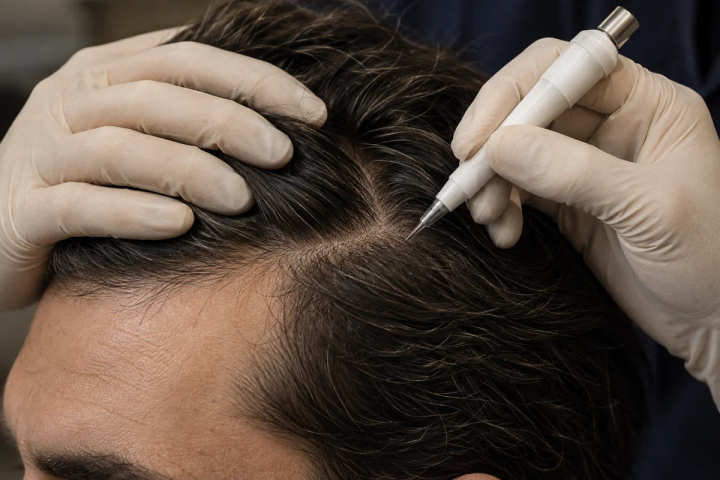
Discretion starts with clear expectations.
If keeping your hairstyle matters, say so in the consultation. Ask which area would be trimmed, what early healing may look like and whether your existing hair can cover visible signs. “Unshaven” does not mean that treatment will be invisible or that there is no recovery period.
Can everyone choose Long DHI?
No. The area to be treated, existing hair, donor supply and the practical demands of the procedure influence suitability. The clinical team needs to assess these factors before recommending an approach.
Three questions to bring to your assessment.
- Will the recipient area remain unshaven?
- How will the donor area be prepared, and how visible will that preparation be?
- What aftercare and social downtime should I plan for?
What Long DHI means at Koç Hair Center.
The centre’s published description makes a specific distinction: hair in the donor area is cut, while existing hair in the recipient area is preserved. Collected grafts are then placed between existing hairs with a Choi implanter. Confirm the preparation proposed for you before arranging your visit.
Plan for looking after longer hair.
Keeping hair longer changes the practical questions to ask about aftercare. The International Society of Hair Restoration Surgery highlights careful washing and combing to avoid pulling newly placed grafts. Request instructions for your hairstyle and treatment area, including how to manage tangles and when to resume your usual routine.
At your free consultation, explain how you normally wear your hair and any upcoming commitments. Ask the team to identify the donor preparation and recipient treatment areas separately, so you can make an informed decision.
Your questions, answered.
What is Long DHI at Koç Hair Center?
The centre describes Long DHI as transplantation between existing recipient-area hairs without cutting those hairs. Its published description says the donor hair is cut. Confirm the proposed preparation for both areas before your visit, so the word unshaven does not create a different expectation.
Can an FUE transplant be completely unshaven?
Some FUE approaches leave donor hair unshaven; others use a full or partial shave. Recipient hair length is a separate decision. Ask which option suits your procedure. Long DHI does not by itself establish that your donor area will remain completely unshaven.
Can women have an unshaven hair transplant?
Selected women may be suitable for transplantation with a no-shave approach. The cause and pattern of thinning, donor hair and underlying medical conditions need assessment first. Preserving hair length is a preference to discuss, but it cannot establish whether transplantation is appropriate for your hair loss.
Can I return to work the next day after Long DHI?
Do not assume that keeping your hair longer removes the need for recovery. Return to work depends on the procedure, healing and what your job involves. Discuss your schedule in advance and follow your team’s advice about activity, washing and follow-up before committing to a return date.
How do I wash and comb longer hair after a transplant?
Ask for instructions tailored to the transplanted areas and your existing hair length. Washing and combing need care so you do not pull newly placed grafts. Your treating team should explain the technique and timing; ordinary grooming routines should not simply be resumed without that guidance.
Will an unshaven transplant avoid the shedding phase?
Keeping hair longer does not mean immediate growth. Transplanted hairs can shed during healing before new growth develops. Compare follow-up photographs at the intervals agreed with your team, rather than treating early shedding as the final outcome of the procedure.
Does an unshaven transplant leave no scars?
No. Leaving hair longer does not change the fact that follicles are removed surgically. Where FUE is used, small extraction scars remain. How visible they become depends on factors such as healing, the extraction pattern and hairstyle. Discuss donor-area appearance as part of the plan.
Can I keep my usual hairstyle throughout the process?
It depends on the treated areas and donor preparation. Longer surrounding hair can sometimes cover a partial shave, but coverage is not automatic. Show your usual hairstyle and ask the team to explain the preparation proposed for each area.