
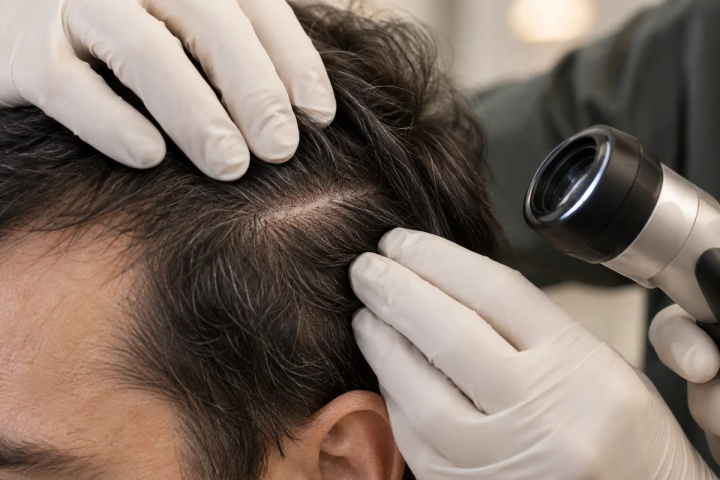
A plan shaped by your scar
A hairless scar can limit how you wear your hair. A useful consultation starts with the change you would like to see, then considers what your scalp and donor hair can realistically support. The aim is better camouflage and a result that blends with the surrounding hair.
Why scar tissue needs a different assessment
Scars can have altered blood supply, thickness and flexibility. These factors affect graft placement and survival. A mature, stable scar needs a different discussion from an area with ongoing inflammation or active scarring hair loss. The underlying condition must be assessed before surgery is considered.
What your assessment should cover
- How the scar developed, how long it has been present and whether it has changed.
- The condition of the scar and the surrounding scalp.
- Available donor hair and the direction of nearby hair growth.
- Your previous procedures, relevant medical history and desired coverage.
Careful placement and realistic expectations
Depending on the tissue, a clinician may recommend a small test area or a staged approach. FUE can provide donor follicles, but choosing an extraction method does not by itself establish that a scar is suitable for implantation. Some scars need another reconstructive approach.
Published studies describe improvement in selected burn and surgical scars, but individual results vary. Transplantation does not remove the original scar, and it cannot guarantee normal scalp density. Follow-up should assess both growth and how the tissue heals.
Start with a free consultation
Ask İbrahim Koç’s team about an assessment of your scar. Begin with the consultation form, your situation and the seven requested photos. The next step is to discuss whether transplantation, another option or further clinical evaluation is appropriate before making travel plans.
Your questions, answered.
Can hair be transplanted into scar tissue?
It can be considered for some scars, but suitability depends on blood supply, tissue thickness and the surrounding scalp. The team must assess whether implanted follicles can survive there. A scar’s appearance in a photograph cannot answer every clinical question.
Can a hair transplant help cover an old burn scar?
Published clinical studies describe improved coverage in selected people with postburn hair loss. That does not establish the likely result for every burn scar. The depth and condition of your tissue, donor supply and intended coverage need individual assessment.
Will a transplant remove the original scar?
No. It places hair into suitable tissue to help camouflage the area; the scar itself remains. Some people need a different reconstructive approach or a combination of procedures. Ask what visual improvement is realistic for the particular scar you want to address.
How long should a scar heal before transplantation is considered?
There is no single waiting period that establishes suitability for every scar. The clinician needs to assess tissue healing and stability. If inflammation caused the scarring, documented disease control matters as well as the time since the scar appeared.
Why might a small test transplant be recommended?
A limited test area can help assess how grafts behave in scarred tissue before a larger procedure is planned. It may be considered when blood supply or tissue quality is uncertain. A test does not guarantee the result of wider treatment.
Can active scarring alopecia be treated with a transplant?
Active inflammatory scarring conditions need medical assessment and disease control first. For conditions such as lichen planopilaris, transplantation may only be considered after sustained stability, and the disease can recur. A transplant does not treat the underlying inflammation.
Does FUE create new scars while treating an existing scar?
FUE harvesting leaves small scars in the donor area. Using those grafts to improve coverage over an older scar does not make the new procedure scar-free. Discuss donor visibility, likely healing and the haircut you hope to wear afterwards.
Is scalp micropigmentation an alternative for hiding a scar?
It may be an option for selected, stable scars. Micropigmentation adds pigment to reduce visual contrast; it does not create hair. Pigment can behave unpredictably in scar tissue, so suitability and the experience of the practitioner need careful consideration.