
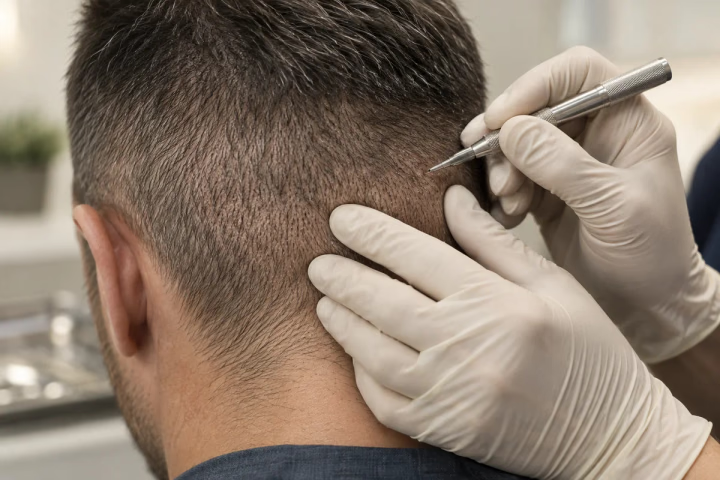
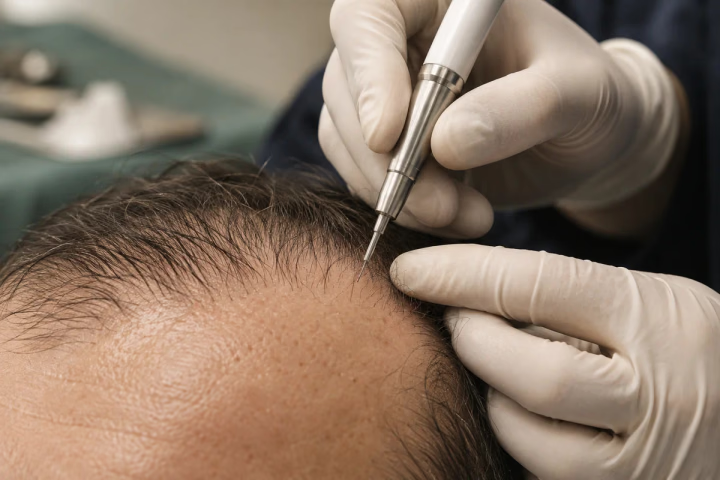
FUE describes the harvesting of follicular units. DHI generally describes implantation with an implanter device. A procedure can use both, so they are not always competing alternatives.
| Question | FUE | DHI |
|---|---|---|
| Which stage? | Collection of donor grafts. | Placement of grafts. |
| How? | Individual follicular units are excised using small punches. | Grafts are placed using an implanter. |
| Can they be combined? | Yes. Grafts collected by FUE can be implanted with DHI. | |
| Guaranteed outcome? | Neither term guarantees density, growth or a scar-free result. | |
What should guide the choice?
Start with the area to restore, donor supply, scalp health and likely future thinning. Then ask the team to explain its proposed harvesting and placement methods. A technique label cannot replace an individual plan or establish the skill of the operator.
Questions worth asking.
- Why is this approach appropriate for my hair loss pattern?
- How much donor hair will remain after extraction?
- Who performs harvesting, implantation and medical supervision?
- What are the limitations, risks and expected recovery?
- How are follow-up and any concerns handled after I return home?
Your questions, answered.
Can FUE and DHI be used in the same hair transplant?
Yes. A treatment can collect grafts individually using FUE and then place those grafts using an implanter described as DHI. Koç Hair Center’s DHI process includes donor collection before implantation. Ask for the collection and placement stages to be explained separately in your proposed treatment plan.
Which gives better results, FUE or DHI?
The name alone cannot establish which treatment plan will give you the better outcome. Results are not completely predictable, and suitability must be assessed individually. Ask how the recommendation addresses your goals and what its limitations are, then compare those explanations rather than a technique label.
Is DHI scar-free compared with FUE?
An implantation label does not remove scars from donor harvesting. If FUE is used to collect grafts for DHI, the extraction sites still heal with small scars. Ask about donor preparation and harvesting when comparing scar claims, as well as the appearance expected in the treated area.
Is recovery faster with DHI than FUE?
A label is not enough to predict your return to normal activities. Recovery depends on the extent and complexity of the procedure and your healing. Request a timetable for the actual treatment proposed, including donor and recipient care, rather than assuming a fixed advantage from the advertised method.
Should I choose the method that promises the most grafts?
No. A useful proposal explains what the available donor hair can support and how it will be distributed. Extracting more is not automatically the best plan for your present and future needs. Compare the assessment of your donor area alongside the intended coverage and limitations.
What questions should I ask before choosing a technique?
Ask why the technique is recommended for you, what results are realistic, what risks apply and what recovery involves. Request relevant before-and-after examples and an explanation of follow-up if a problem occurs. Bring these questions to your free consultation so the discussion starts with your needs.