
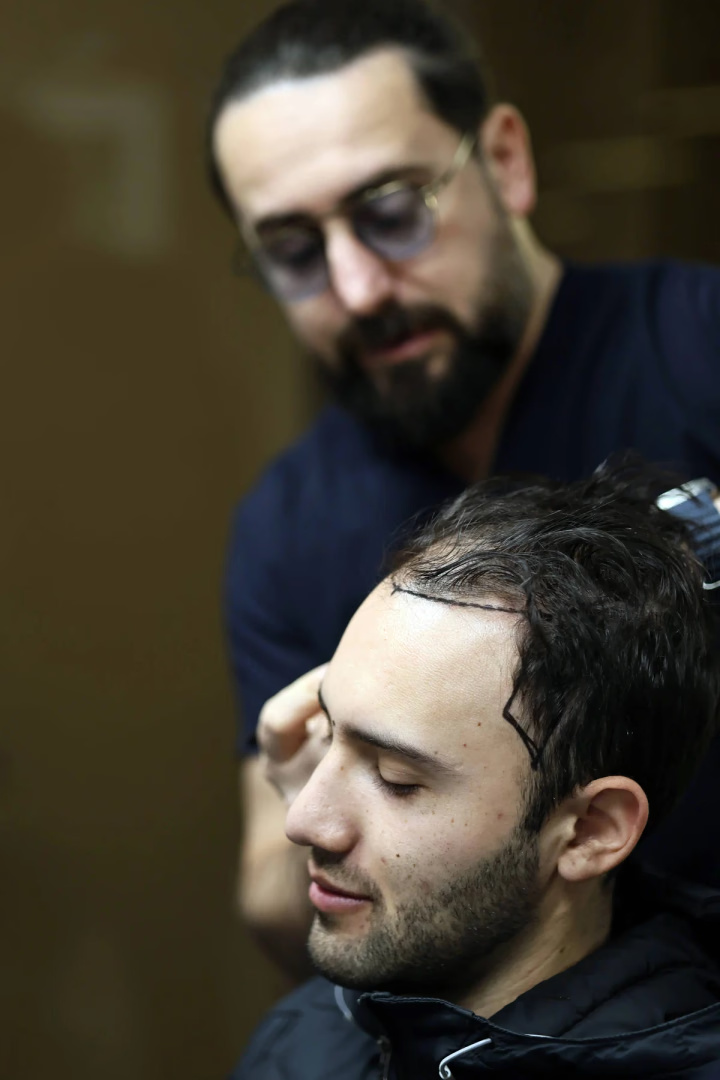
Hairline planning considers facial proportions, existing hair, age, donor capacity and possible future loss. The aim is a coherent result that can still make sense as your hair changes.
Start with your existing hair.
Hair thickness, colour contrast, texture and the current pattern of loss influence the appearance of coverage. The same number of grafts can look different on two people. Ask the team to explain what these characteristics mean for your expectations.
Protect tomorrow’s options.
The donor supply is finite. Using it aggressively in one area can reduce the options available if other areas thin later. A responsible discussion includes both your current priorities and the longer-term picture.
Agree on the plan before treatment.
At the in-person assessment, discuss the proposed shape, coverage priorities and limitations. Ask to see the marked hairline and to understand how the team has balanced your wishes with the available donor hair.
Look for relevant examples.
When viewing before-and-after photographs, ask whether the starting hair loss, hair characteristics and treatment goals resemble yours. Check timing, lighting, angles and styling. A single successful example cannot predict your result.
Your questions, answered.
Can a hair transplant lower my hairline?
It may be possible, but the appropriate position needs individual planning. A lower line is not automatically a better fit. Discuss your original hairline, facial features, donor supply and possible future thinning before agreeing the shape. Ask the team to explain the proposed position on your own scalp.
What happens if a transplanted hairline is too low?
A very low or overly straight hairline can look unnatural and may be difficult to revise. Correction requires assessment of the existing grafts, surrounding hair and remaining donor supply. The best opportunity to discuss your concerns is before treatment, when the intended line can still be reviewed.
Am I too young to lower a receding hairline?
Age alone does not answer that question, but early hair loss makes future planning more uncertain. Donor selection and the likely progression of thinning need particular attention in younger patients. A clinician may recommend postponing transplantation rather than creating a low hairline that becomes difficult to maintain.
What makes a transplanted hairline look natural?
The position and shape should fit the person, while graft size, direction and placement influence the appearance. Poorly positioned or angled grafts can make a hairline stand out. Ask how the proposed design will blend with your existing hair rather than copying a photograph of somebody else.
Can I see and discuss the proposed hairline before treatment?
Yes, the plan should be discussed before surgery. Ask to see the line marked on your scalp, explain what you like or would change, and listen to the clinical reasoning behind its position. The aim is a shared understanding of the design, its limits and your priorities.
Should my new hairline match the one I had as a teenager?
Not necessarily. A design needs to make sense with your current features and the possibility of more hair loss. Recreating an earlier line may use donor hair that could be needed elsewhere later. Discuss a position that balances the appearance you want now with a longer-term plan.